流浪子
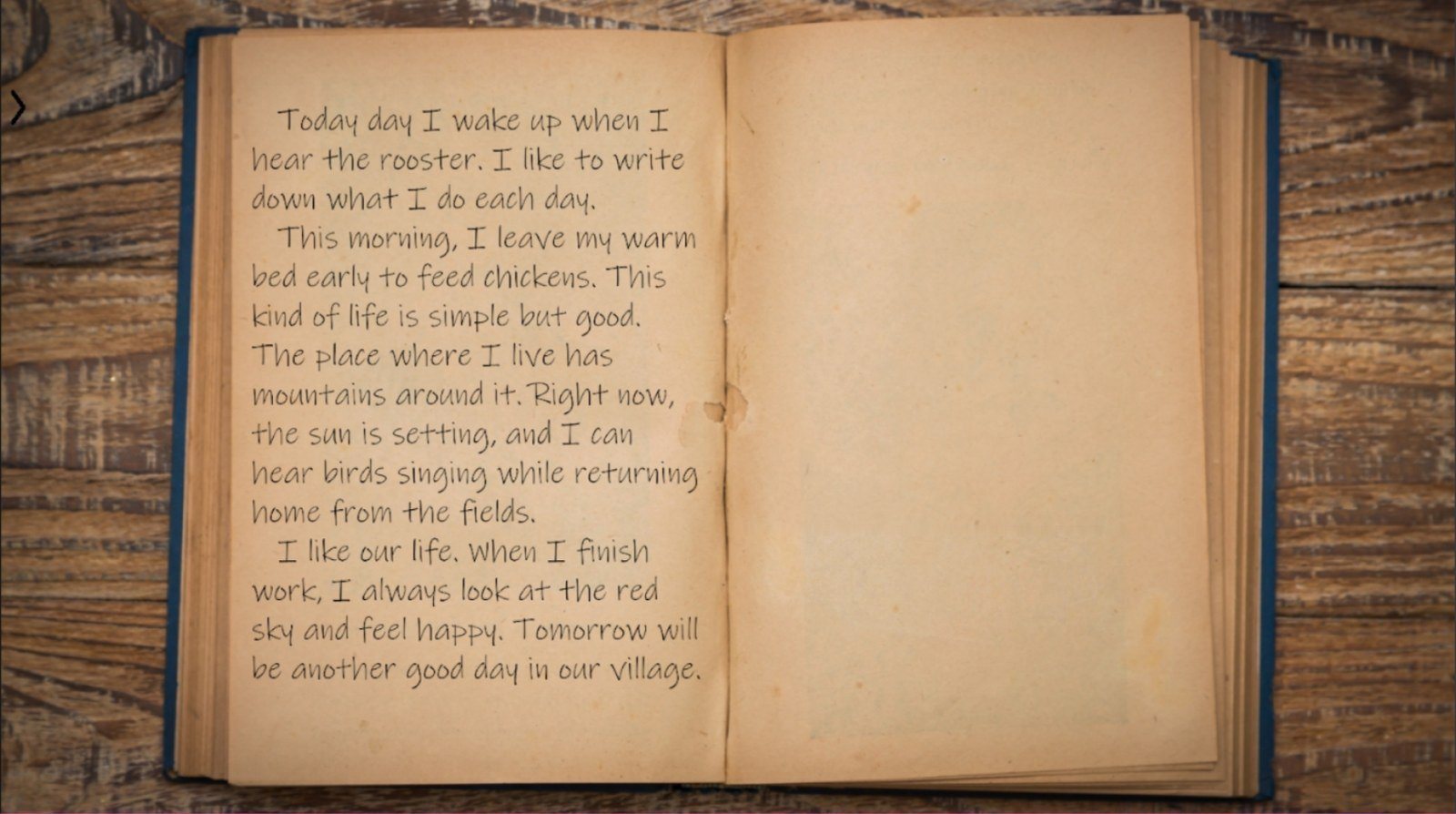
REVENANTA villager's diary, and the card hidden in her room. Drag the card onto the left page. ←
01 / THE STORY
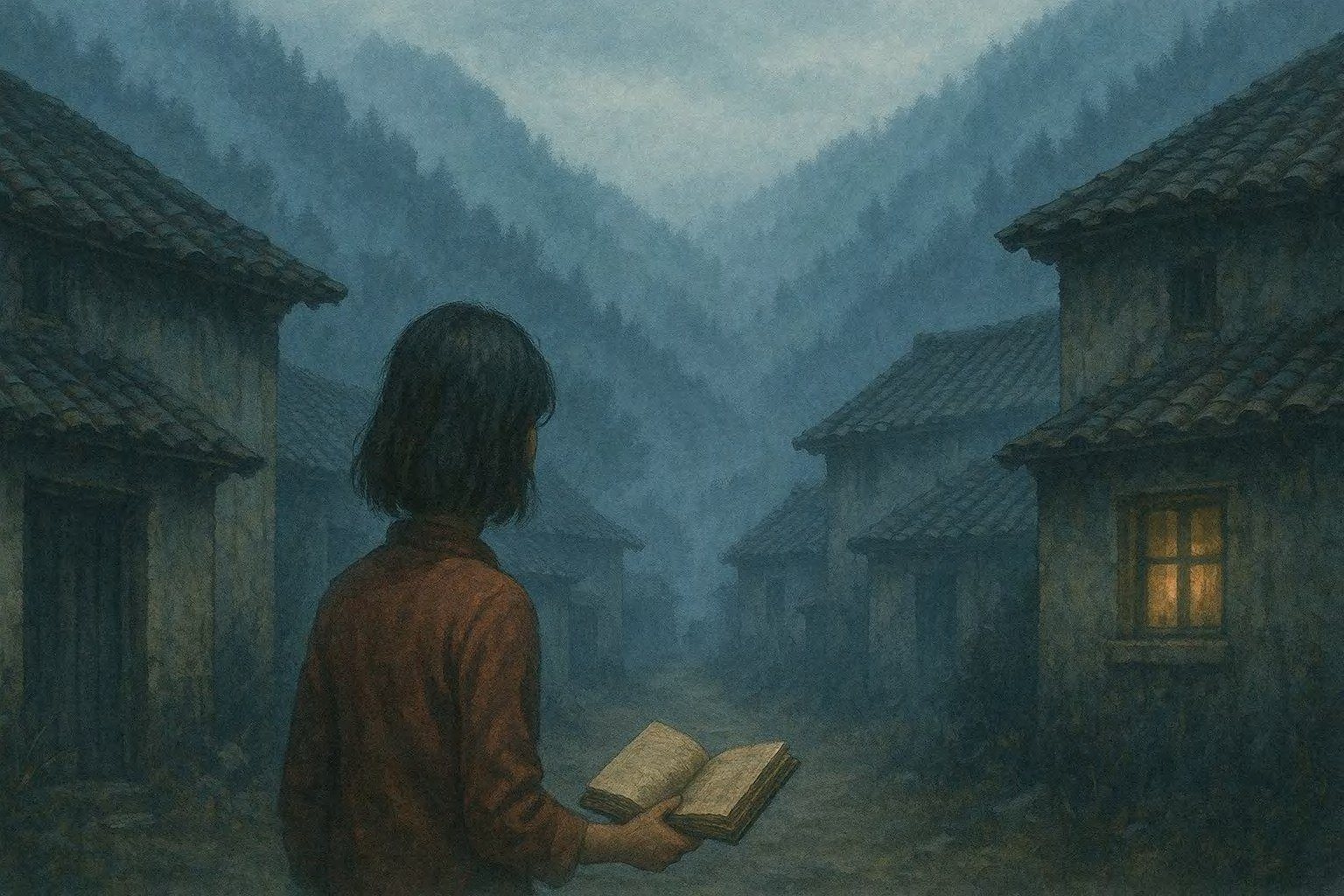
She was raised far away. She came back anyway.
Revenant is a 2D puzzle adventure built on Chinese folklore and told entirely through diary pages. Raised by adoptive parents, the protagonist takes an unexpected chance to return to the village she was born in. Once she arrives, she slowly realises something is terribly wrong — and that perhaps, after being sent away all those years ago, she was never meant to come back.
02 / DESIGN HIGHLIGHT · CHAPTER TITLES
One chapter, two titles — each from its own culture.
- Contrast. Every Chinese title is a Shanghai huaji (comic opera) piece from the mid-to-late 20th century — an art form made for joy and laughter — placed over a tragic story.
- Culture. Huaji opera is part of China's National Intangible Cultural Heritage. The titles carry contemporary folk art into the game.
- Localization. The English titles are not translations. They are works originally written in English — the way Like a Dragon 8 localizes its chapter titles, with Elvis songs for English players and Japanese artists' songs for Japanese players.
03 / THREE PUZZLES · PLAY THEM HERE
Every puzzle is a way of reading.
Each puzzle teaches the player to look at a page differently: where things belong, what shows through, which word is the real one.
Fragments of childhood
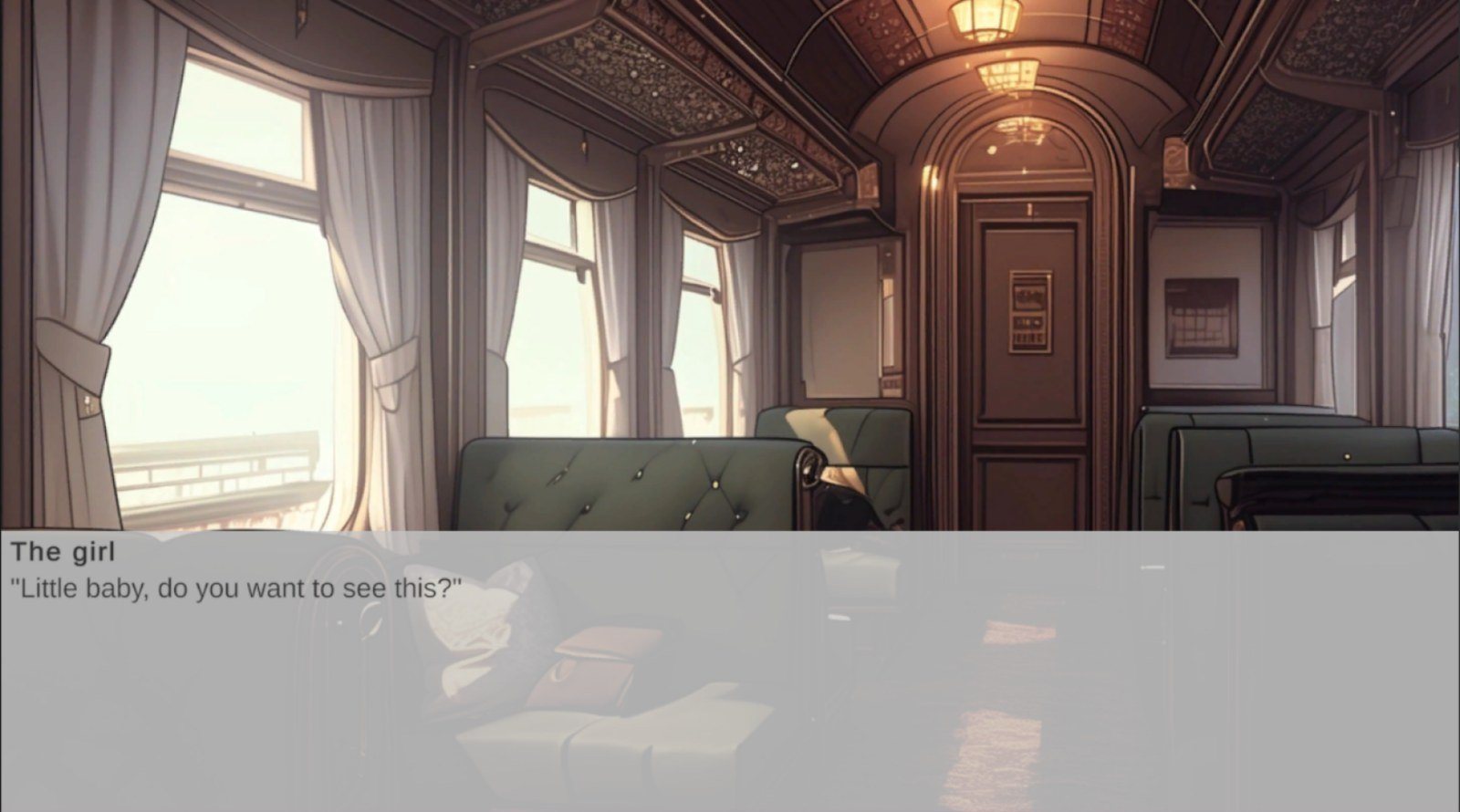
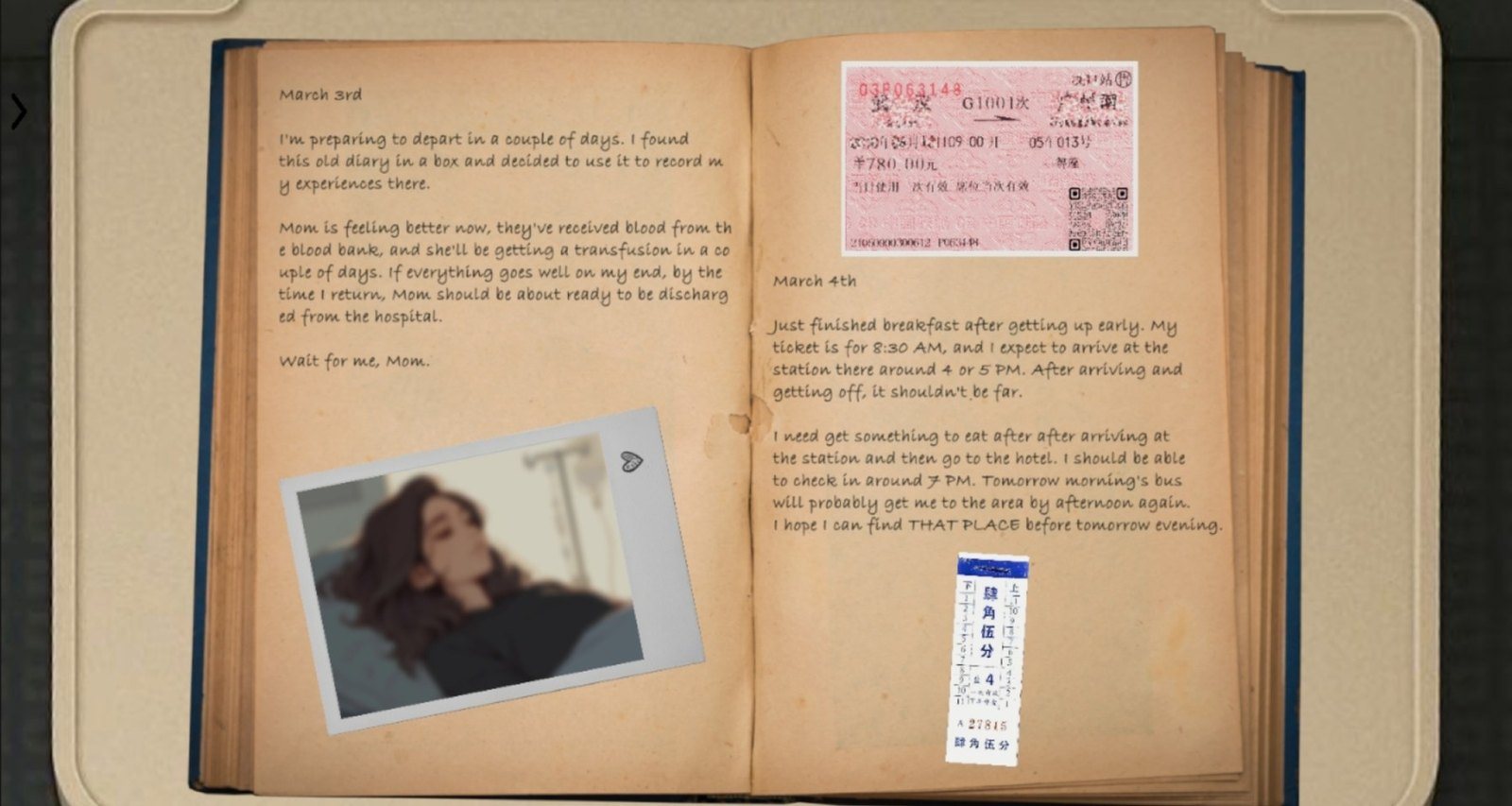
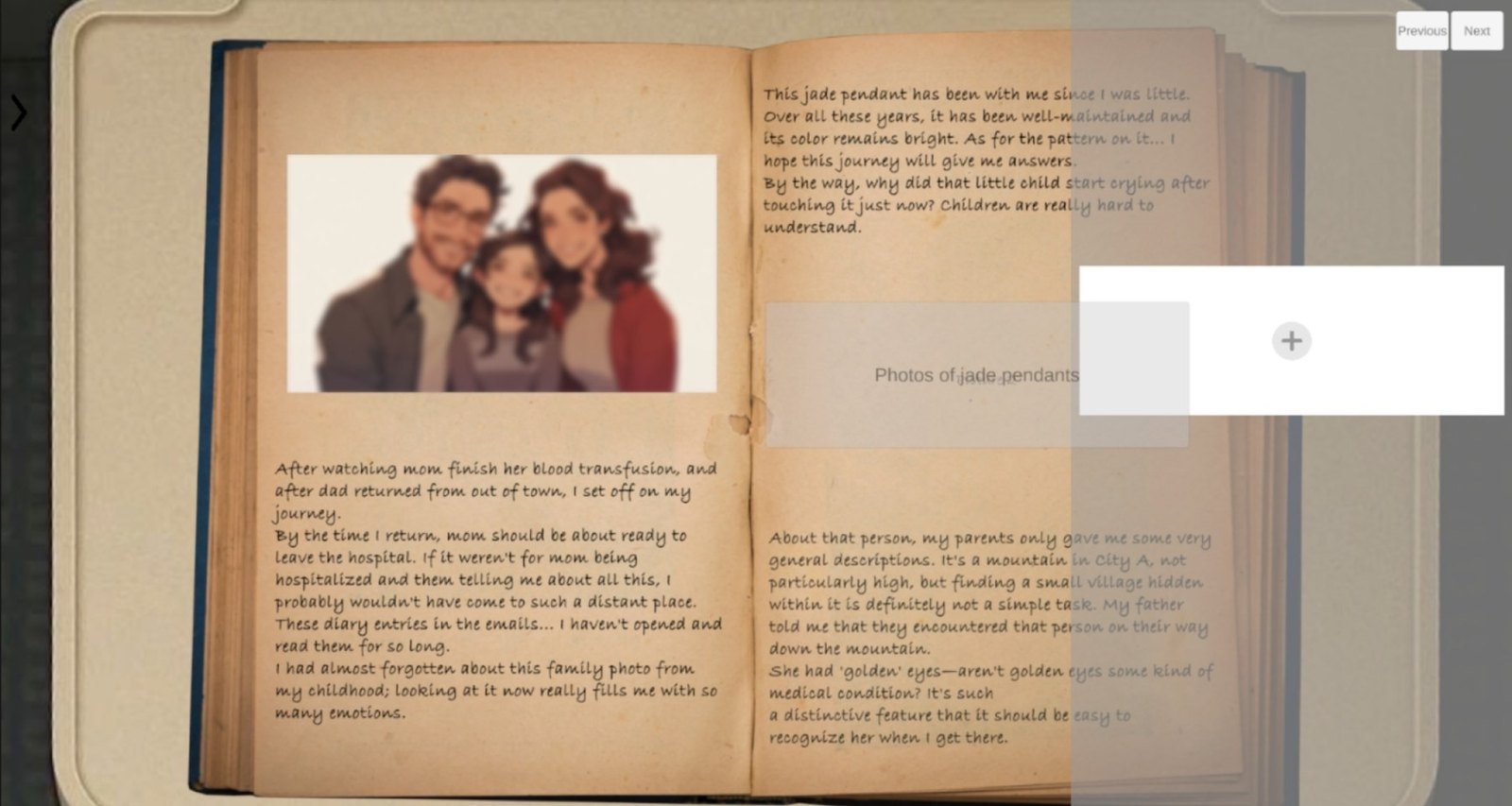
The opening puzzle. On the train, she pastes her keepsakes into a new diary. Nothing tells you the order — only where each piece belongs. Put every piece in its place and the entry writes itself.
It teaches the game's three verbs — view, drag, combine — while the photos and her mother's hospital bed set up why she is going.
0 / 5 PLACED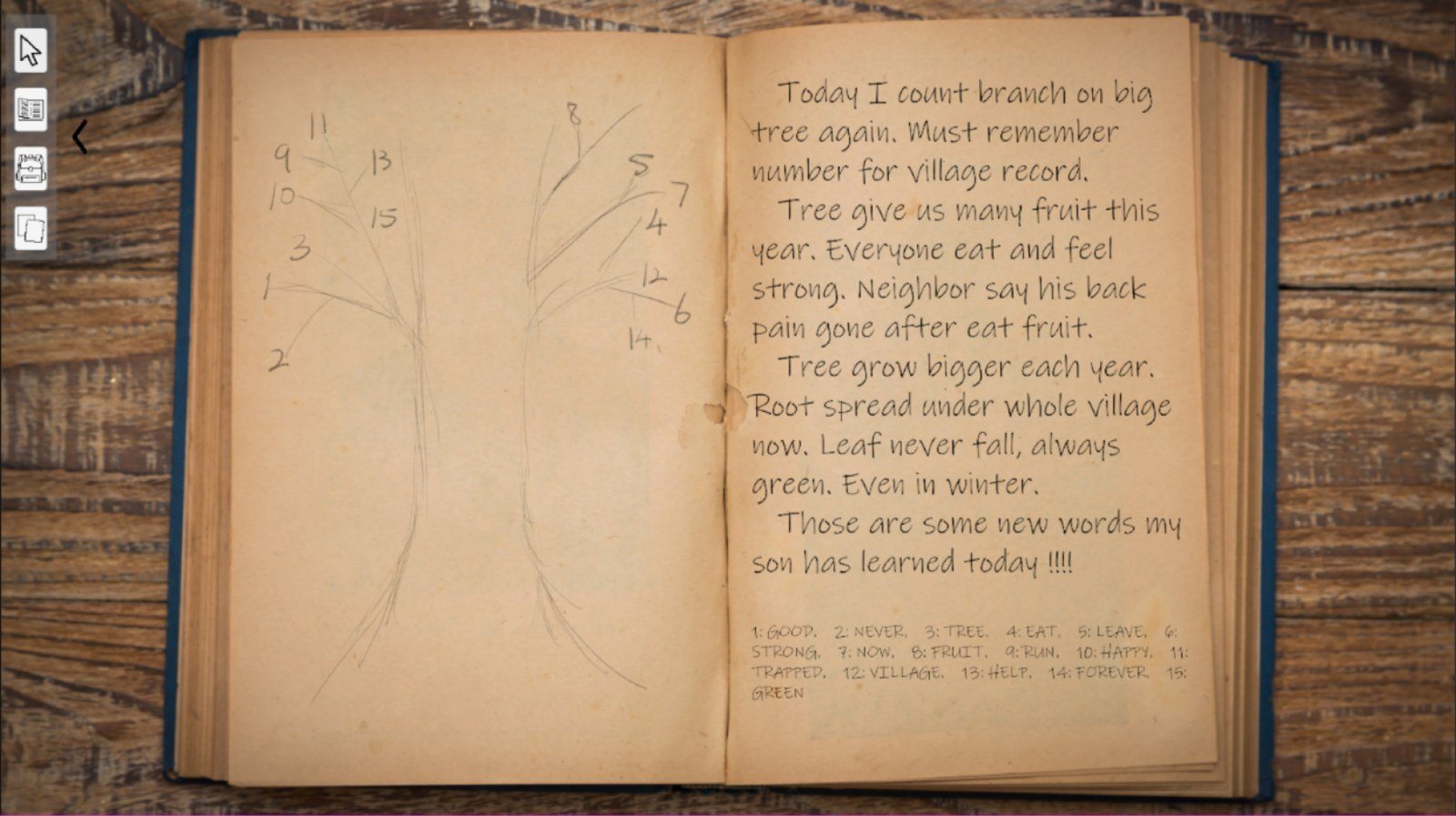
What shows through
The card is hidden in a villager's room. Laid over an ordinary diary it leaves only a few words visible — you did that above. On the next page the same card turns a child's word list into a code table: the branch numbers that show through point to words.
The card only works on the right pages — the script checks which page is open before it lets the card decode.
Three day work
Like an acrostic, but the hidden word is not the first one. The title is the key: three. Click the hidden words in order — one mistake and every word resets.
04 / SYSTEMS
Twelve small scripts, one way of playing.
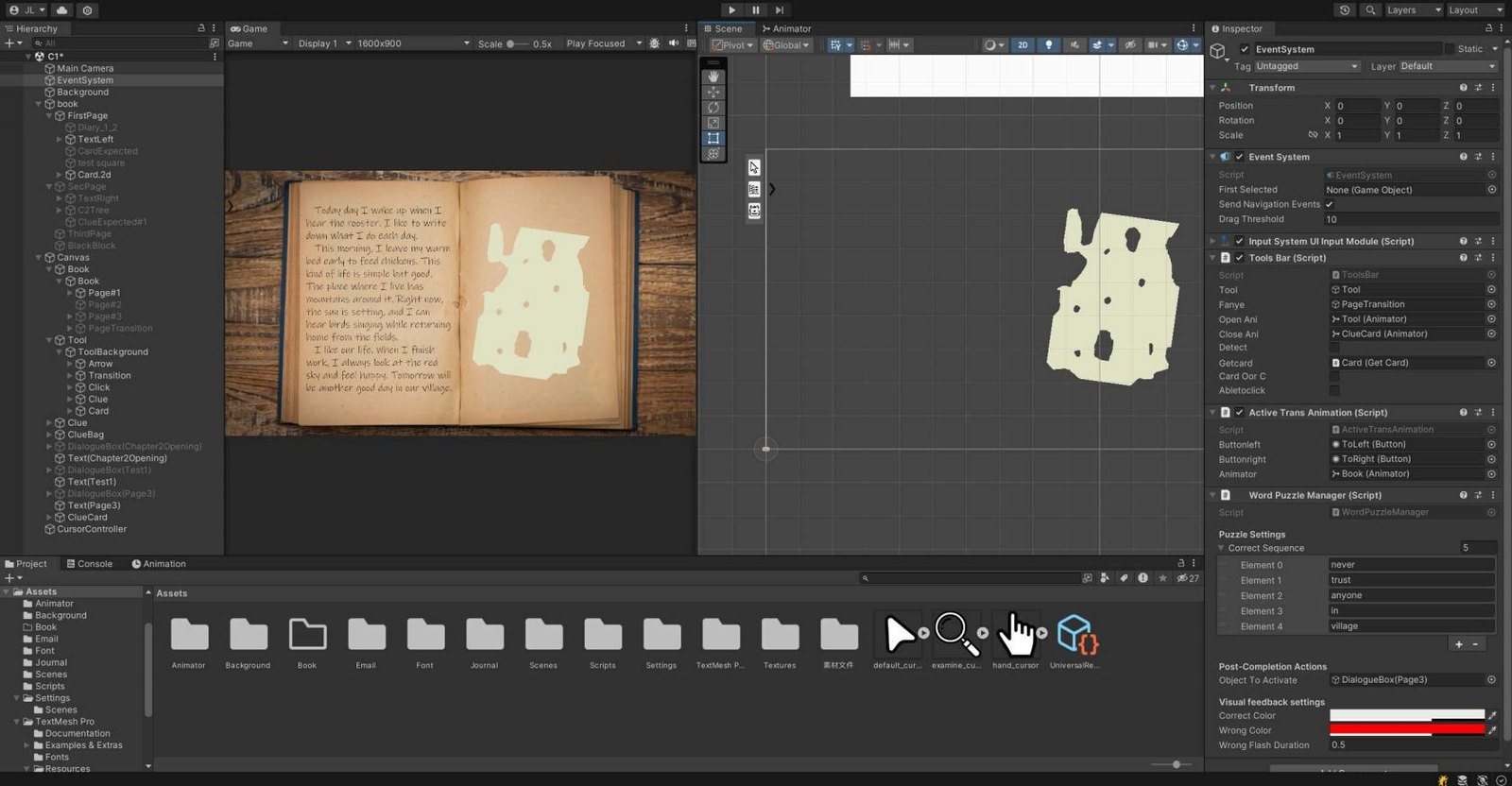
Three universal scripts run the whole game; the rest belong to a single puzzle. Open the toolbar like the one at the edge of the game screen.
This page runs two of them. Your cursor is the game's Cursor Manager — arrow, hand, magnifier, depending on what you point at. Dialogue lines type themselves like the Dialogue Typewriter.
public string[] correctSequence =
  { "never", "trust", "anyone", "in", "village" };
// correct → keep highlighted, wait for the next
// wrong   → flash red, reset all
05 / INSPIRATION
Fear of the familiar.
Recent Chinese horror games share something: they rarely rely on jump scares. Fear comes from atmosphere and from familiar things that are slightly wrong — that sense of “something isn't right here.”
Like The Shining, or Japan's Sadako, Chinese horror grows out of culturally specific details. When you recognise a room or an object you feel you have seen before, the fear arrives on its own.
Fireworks, Sanfu and Paper Bride — contemporary Chinese horror that showed me traditional culture can carry a game, for players anywhere.
Like a Dragon 8 names its chapters after songs, and changes them for each language — King Gnu's “Hakujitsu” for Japanese players, Elvis Presley's “Doin' the Best I Can” for English ones. Revenant's chapter titles follow the same idea (see 02).
06 / ART & PROCESS
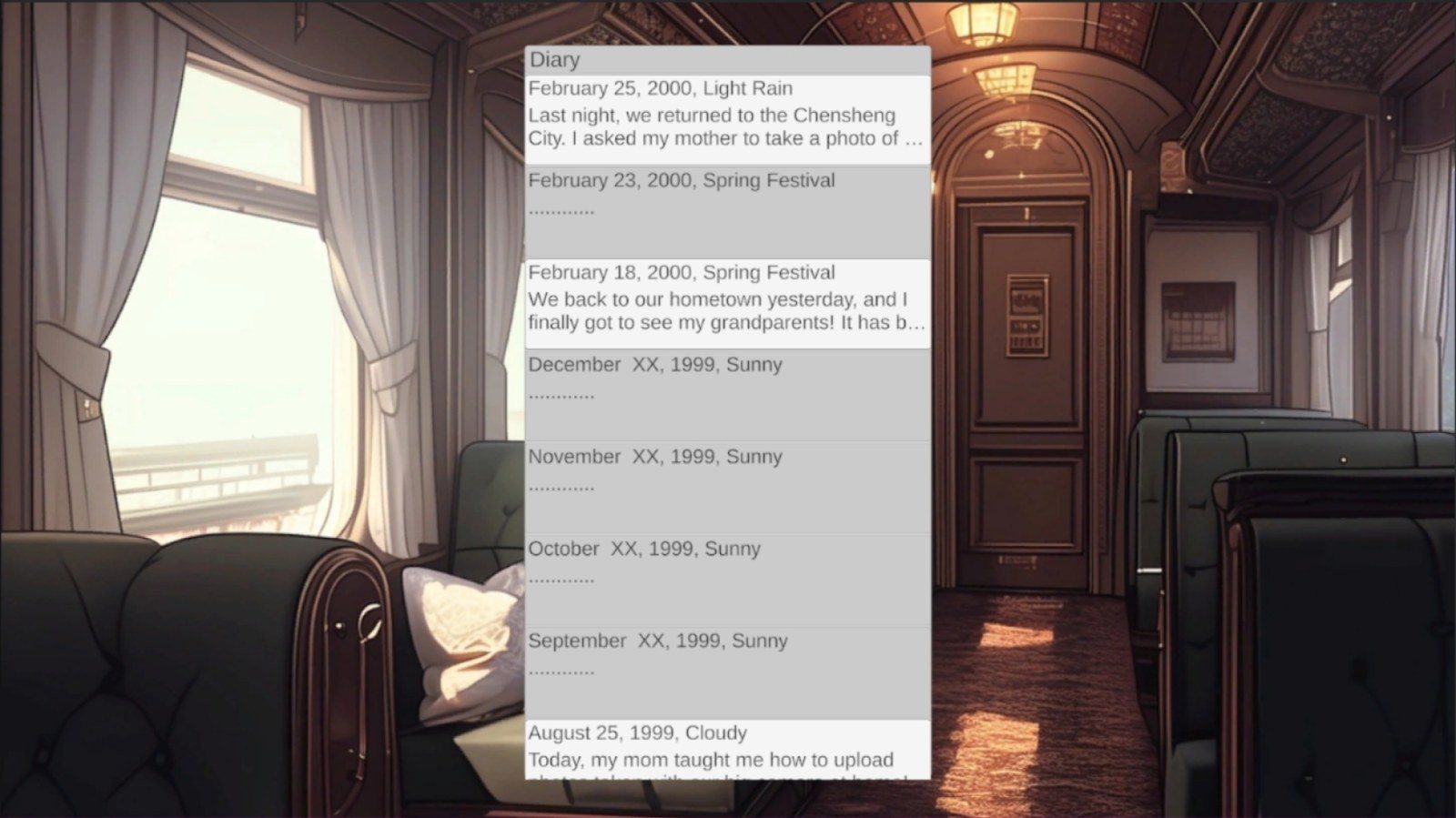
Chapter 1, on the train.
笑着向昨天告别
FINAL CHAPTER · 1961 · THE DEAD
往前走吧,不要回头。
Keep walking. Don't look back.